 +44 20 8954 9881
 WF Planner
  WhatsApp
  Instagram
  OneID By WF
  WF Apps incl. Tafsir Tadabbur
  Donate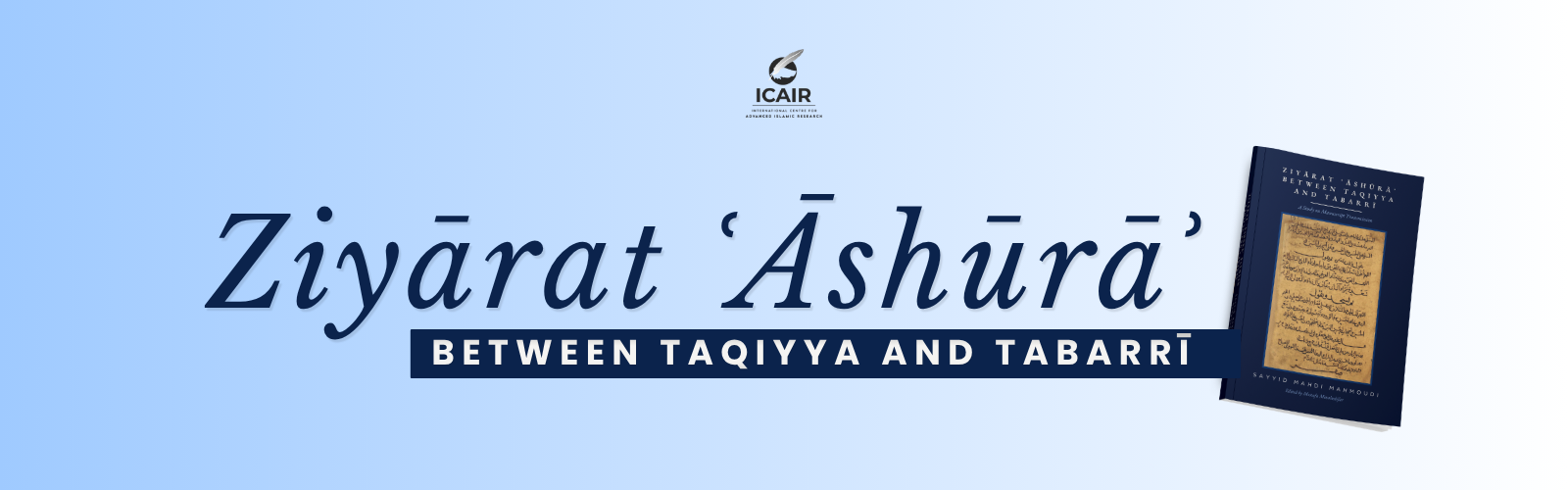
ICAIR Publishes Ziyārat ʿĀshūrāʾ Between Taqiyya and Tabarrī
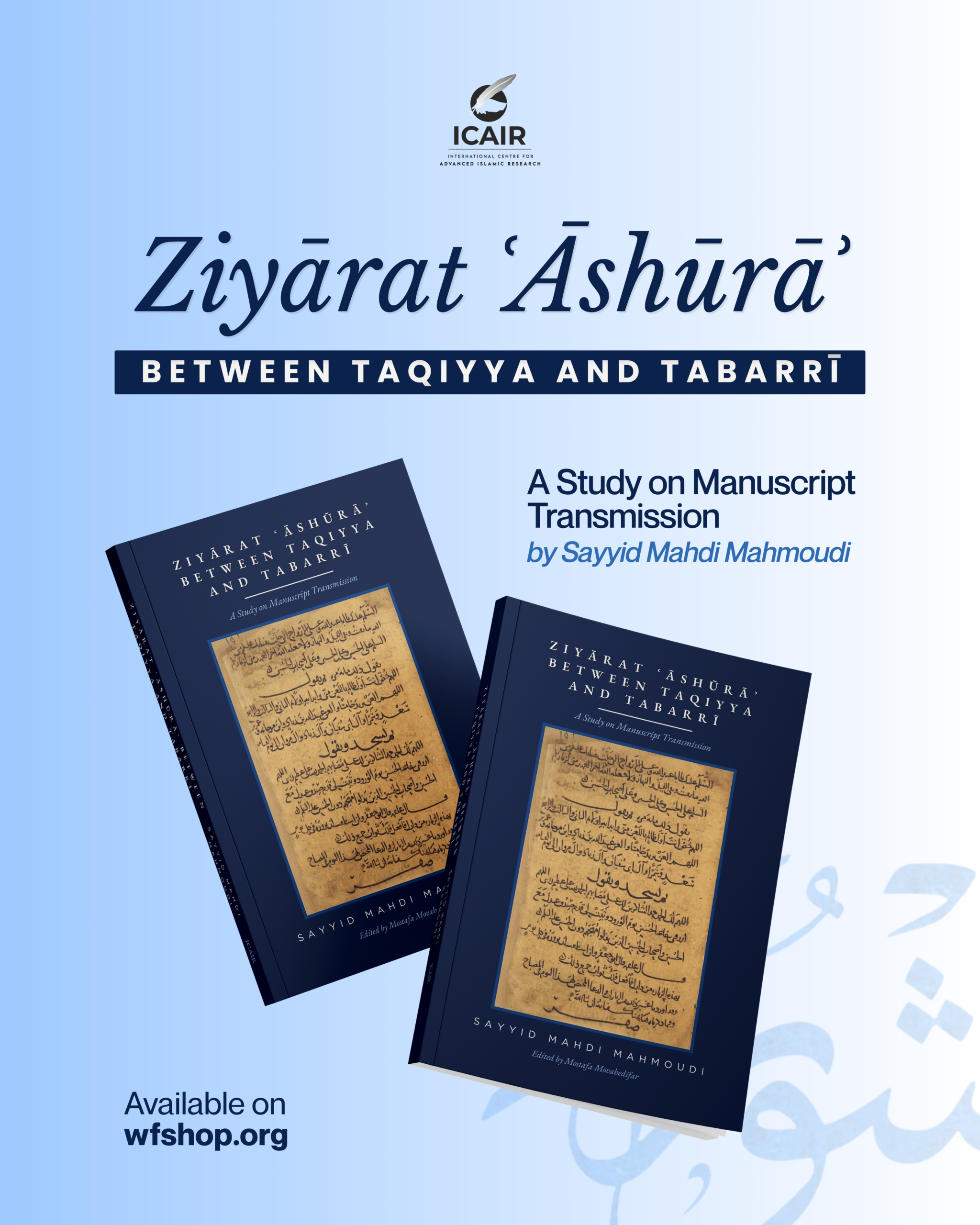
The International Centre for Advanced Islamic Research (ICAIR) is pleased to announce the publication of Ziyārat ʿĀshūrāʾ Between Taqiyya and Tabarrī: A Study on Manuscript Transmission by Sayyid Mahdi Mahmoudi, edited by Mostafa Movahedifar.
Few devotional texts occupy a place in Shīʿī religious life as central as Ziyārat ʿĀshūrāʾ. Recited daily by countless believers across the world, it has served for centuries as an expression of loyalty to Imam al-Ḥusayn (ʿa), devotion to the Ahl al-Bayt (ʿa), and dissociation from oppression and injustice. Yet the final passages of the ziyārat, particularly those containing explicit expressions of tabarrī and the well-known curses, have in recent decades become the subject of scholarly debate. Were these passages part of the original text, or were they later additions that entered the tradition over time?
Drawing upon an extensive examination of manuscripts, historical sources, and textual evidence spanning several centuries, Sayyid Mahdi Mahmoudi offers the most comprehensive study of this question to date. The book investigates more than one hundred manuscript witnesses, tracing patterns of omission, alteration, and preservation across different periods of Shīʿī history. In doing so, it presents a detailed reconstruction of the transmission history of Ziyārat ʿĀshūrāʾ and the circumstances that shaped its preservation.
A central contribution of the study is its analysis of dissimulation (taqiyya) as a factor in textual transmission. The author argues that the omission or modification of certain passages in a number of manuscripts is best understood within the political and social realities faced by Shīʿī scholars and scribes living under hostile conditions. Through close engagement with the works of figures such as Ibn Qūlawayh, Shaykh al-Ṭūsī, al-Tamīmī al-Sabzawārī, and ʿAllāma al-Ḥillī, the book explores how prudential discretion influenced the copying, transmission, and circulation of devotional texts without compromising their underlying authenticity.
Beyond the specific case of Ziyārat ʿĀshūrāʾ, the work constitutes a significant contribution to the broader fields of Shīʿī manuscript studies, textual criticism, and intellectual history. It sheds light on the mechanisms through which religious texts were preserved, transmitted, and defended across changing historical circumstances, while offering valuable insight into the relationship between doctrine, devotion, and political reality in the formative centuries of Imāmī scholarship.
Ziyārat ʿĀshūrāʾ Between Taqiyya and Tabarrī forms part of ICAIR’s ongoing commitment to making important contemporary scholarship available to English-speaking audiences. Combining meticulous manuscript research with historical analysis, it provides both specialists and serious students of Shīʿī studies with an important resource for understanding one of the most widely recited texts in the Shīʿī tradition and the complex history of its transmission.