 +44 20 8954 9881
 WF Planner
  WhatsApp
  Instagram
  OneID By WF
  WF Apps incl. Tafsir Tadabbur
  Donate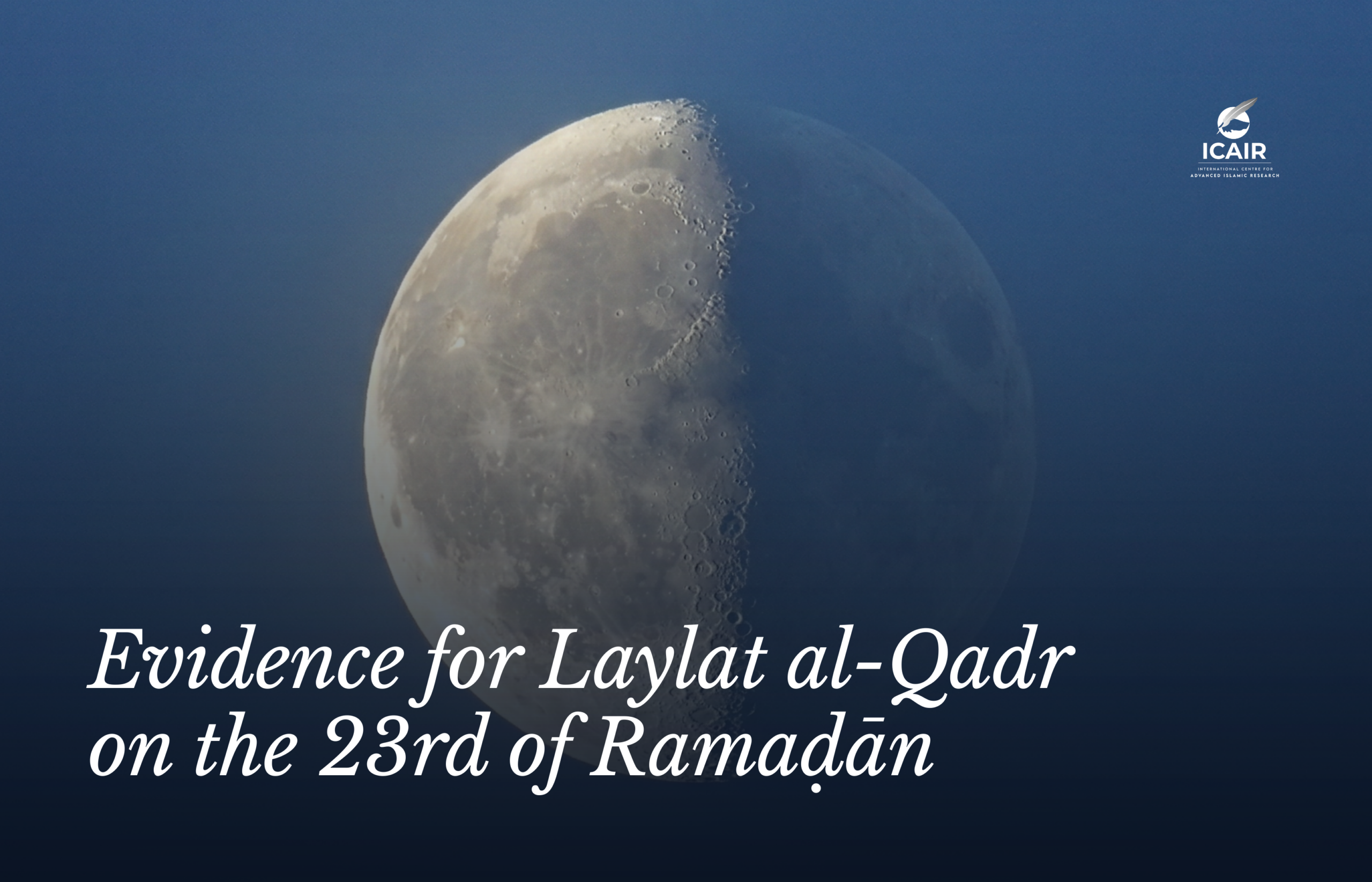
The International Centre for Advanced Islamic Research (ICAIR) has published a new research note by Ammar Muslim al-Dodomi titled ‘Laylat al-Qadr and the 23rd of Ramaḍān: Textual, Historical, and Astronomical Corroboration’.
The study examines one of the most significant questions associated with the final nights of Ramaḍān, namely: Which night most plausibly corresponds to Laylat al-Qadr?
While the Qurʾān emphasises the immense spiritual value of this night, the precise identification of Laylat al-Qadr has historically been discussed across both Imāmī and Sunni traditions, with several nights in the final ten days of Ramaḍān proposed as candidates.
Drawing upon transmitted reports concerning the descent of the Qurʾān, narrations specifying candidate nights, the historical account of the Companion ʿAbdullāh b. Unays al-Juhanī, and a Prophetic report describing a distinctive lunar sign, the note demonstrates how multiple lines of evidence converge upon the 23rd night of Ramaḍān as the most substantiated candidate.
By bringing together textual analysis, historical transmission, and astronomical observation, the study highlights how classical sources approached the identification of Laylat al-Qadr and how different forms of evidence can reinforce one another within the Islamic scholarly tradition.
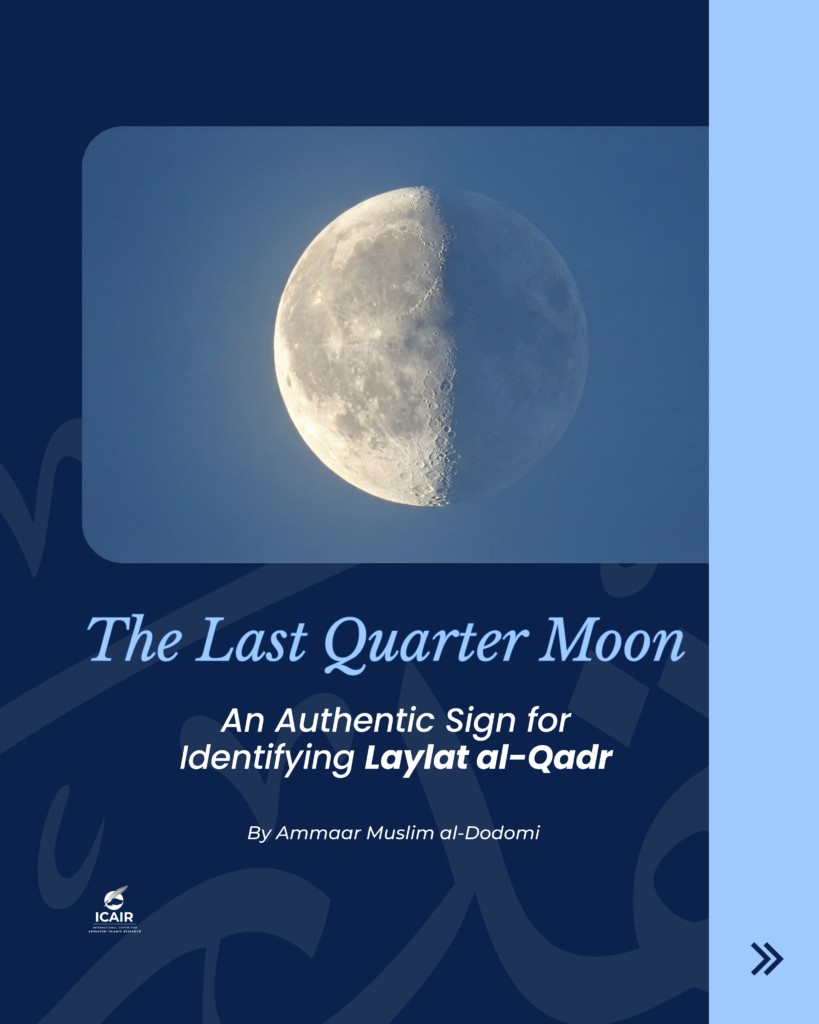
In addition, ICAIR has published a companion Instagram carousel based on the final section of the study, “The Last Quarter Moon: An Authentic Sign for Identifying Laylat al-Qadr”. The post explains how a Prophetic report describing the appearance of the moon after Laylat al-Qadr corresponds to the astronomical phase known as the last quarter moon, and how this observation supports the identification of the 23rd night of Ramaḍān. View the carousel on ICAIR’s Instagram page.